Skills and Human Capital
Human capital and education are at the centre of a knowledge economy. More than ever, our level of education and skills will determine future social cohesion, prosperity and sustainability. Europe was once a beacon of educational performance, and a model for other countries to follow, but much has happened in recent decades to undermine Europe’s education record. Too few resources are spent, too little self-responsibility is given to our schools and universities, and too little attention is being paid to other regions that are rapidly advancing their own education systems. Against this backdrop, the Lisbon Council deems it of utmost importance to strengthen and broaden the debate surrounding European educational systems.
Among the highlights of the Skills and Human Capital Initiative are:
The 2011 Skills and Human Capital Summit: Getting Europe Back to Work
September 2011
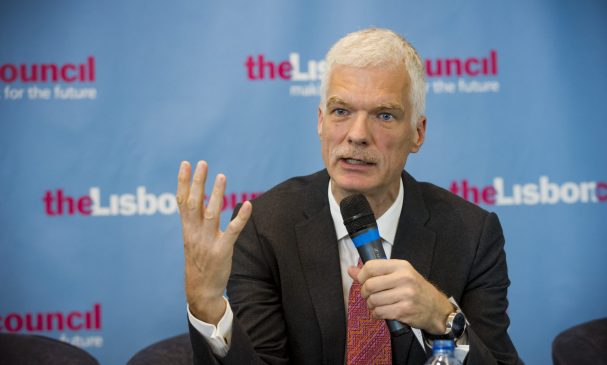
The 2011 Skills and Human Capital Summit convened under the timely theme of Getting Europe Back to Work: How Skills and Human Capital Can Accelerate Growth and Innovation. Andreas Schleicher, special adviser on education policy to the secretary-general of the OECD and head of the indicators and analysis division at the directorate for education, delivered a fascinating and thought-provoking keynote address on the development of PIAAC, the Programme for the International Assessment of Adult Competencies. Nina Arnhold, senior education specialist at World Bank, Krzysztof Gulda, director of the strategy department at the Polish Ministry of Science and Higher Education, and Adam Tyson, head of unit for higher education and Erasmus programme at the European Commission’s directorate-general for education and culture, joined an interactive high-level policy roundtable on how skills and human capital can kick-start much-needed growth, create jobs, spur innovation and provide better life chances for Europeans.
Download Presentation of Andreas Schleicher
Download Presentation of Nina Arnhold
Download Presentation of Krzysztof Gulda
Download Presentation of Adam Tyson
View Photos of The 2011 Skills and Human Capital on the Lisbon Council flickr Photostream
High-Level Roundtable on Employment and Skills Convenes
March 2011
The Government of the Future Centre gathered in Brussels a group of distinguished government executives from various member states as well as European officials to discuss the key role of employment agencies and educational institutions in delivering greater employment and world-class skills development. Among the prominent speakers were Xavier Prats Monné, deputy director-general for education at the European Commission’s directorate-general for education and culture; Annie Gauvin, director for studies, evaluations and international affairs at Pôle emploi in France; Lluís Anaya Torres, IT director of the department for employment at the Government of Catalonia, Spain; Markus Schmitz, managing director of the Bundesagentur für Arbeit in Germany; Ihsan Ajwad, senior economist, human development economics at the World Bank; Peter Went, CEO of WCC Smart Search & Match and Jan-Erik Hunn, human service lead for Europe, Africa and Latin America at Accenture.
Download the Government of the Future Centre Brochure
High-Level Roundtable: New Skills and New Jobs
February 2011
The High-Level Policy Roundtable on Human Capital in European Regions and Cities, co-hosted by the Lisbon Council and the EU2020 Regions Network, convened under timely theme of Human Capital in Regions and Cities: Drivers of Sustainable Growth and Jobs. László Andor, European commissioner for employment, social affairs and inclusion, delivered a forceful keynote address and underlined that skills and human capital are a key driver of sustainable growth and jobs. Dirk Ahner, director-general at DG Regional Policy and Xavier Prats-Monné, deputy-director general at DG Education and Culture, were special guests at an interactive policy roundtable that gathered senior human capital and skills experts from cities and regions. The discussions and debate were animated and informed by the ground-breaking study Human Capital Leading Indicators: How Europe's Regions and Cities Can Drive Growth and Foster Social Inclusion, which was launched in the margins of the event.
Download Human Capital Leading Indicators
Download Commissioner Andor's Speech
Download Director-General Ahner's Presentation
Download María Beunza's Presentation
Download Prof. John Bryson's Presentation
Download Sevdalina Voynova's Presentation
Download Peer Ederer's Presentation
View Photos of the High-Level Roundtable on Human Capital in European Regions and Cities on the Lisbon Council flickr Photostream
Launch of PISA 2009 Results
December 2010
The Lisbon Council had the privilege of hosting the European launch of PISA 2009, a ground-breaking OECD study on international student performance that put education squarely on the policy-making agenda around the globe. The latest findings and analysis from the PISA survey were presented by Barbara Ischinger, director for education in the education directorate at the OECD. The newly released survey indicates that Finland and Korea top the PISA assessment of education performance of 15-years-olds in over 70 countries; Germany is improving fast in reading and mathematics.
Download OECD PISA Presentation
Download OECD Press Release on PISA 2009
Download Executive Summary of PISA 2009
Visit OECD PISA web page for more information
High-Level Working Group on Human Capital Index for European Regions
November 2010
The High-Level Working Group on Human Capital Index for European Regions convened under the timely theme Creating and Maintaining Human Capital in an Age of Transformation. During highly interactive breakout sessions key practitioners discussed the most recent cutting-edge research and new thinking on skills and human capital. The event was kicked-off by Peer Ederer, director of the Human Capital Centre at the Lisbon Council, who gave an advance look at early conclusions from the Human Capital Index of European Regions project due to be published in 2011. Haizheng Li, special-term director of the China Center for Human Capital and Labour Market Research at Central University of Finance and Economics in Beijing and professor of economics at Georgia Institute of Technology, presented his ongoing work on human capital formation in China. Xavier Prats Monné, director for employment and Europe 2020 strategy in DG employment, social affairs and equal opportunities at the European Commission, discussed the European Commission’s ongoing work on New Skills and New Jobs, a flagship initiative of the Europe 2020 programme, and Lars Sondergaard, senior economist in the education unit of the World Bank, shared the early findings of the World Bank’s forthcoming Skills Flagship Report due to be published in 2011.
Download Peer Ederer’s Presentation
Download Haizheng Li’s Presentation
Download Lars Sondergaard’s Presentation
Ann Mettler on Skills at the Spanish EU Presidency Conference
April 2010
In an intervention at the Spanish EU Presidency conference on New Skills and New Jobs convening in Barcelona in April 2010, Ann Mettler, executive director of the Lisbon Council, made the case for why allowing more women to deploy their skills is of crucial importance to economic growth and long-term prosperity. She also shed light on the crucial link between enabling women to deploy their skills and a high-quality public sector, which provides good, affordable and readily accessible health- and childcare services as well as high-performance educational facilities.
Human Capital Index of European Regions
April 2010
The Human Capital Index of European Regions aims to develop an analytical framework measuring and comparing investment in knowledge and education within and between regions. The Lisbon Council’s Human Capital Methodology has been successfully deployed since 2006. Hitherto applied to countries, this one-of-a-kind analytical tool will now be adapted for use at regional and city level. As part of a new, ambitious and far-reaching research study, seven region will serve as case studies: Bratislava (Slovakia), Emilia-Romagna (Italy), Helsinki (Finland), Navarra (Spain), Sofia (Bulgaria), Stockholm (Sweden) and West Midlands (United Kingdom). The core objectives of this project will be investment in human capital, attraction and retention of more people in employment and improvement of the adaptability of workers and enterprises. The Human Capital Index of European Regions will help identify best practices in regions and will also allow policy makers to evaluate the short-, medium- and long-term effectiveness of their policy actions with regards to social inclusion and economic growth. This project is co-funded by DG Employment, Social Affairs and Equal Opportunities as part of PROGRESS, the EU’s employment and social solidarity programme.
The 2010 Skills and Human Capital Summit
January 2010
The Lisbon Council hosted the European launch of a watershed OECD publication on the High Cost of Low Educational Performance. Presented by Andreas Schleicher, head of the Programme for International Student Assessment (PISA) at the OECD, the study demonstrates the enormous economic return on investment in education. If, for instance, all OECD countries could raise their educational performance to Finland’s level, the result could be an aggregate GDP increase of $260 trillion – an important conclusion as the EU is pondering next steps in its EU 2020 strategy.
Watch interview with Andreas Schleicher
Europe 2020: Why Skills are Key for Europe's Future
December 2009
As part of the Lisbon Council's contribution to the Europe 2020 strategy, Paul Hofheinz, president of the Lisbon Council, argues that this crucial agenda should prioritise skills acquisition and the necessary accompanying investment in human capital. He maps out a one-of-a-kind intellectual framework to evaluate skills policy and explains what levers can be utilised to finally move from rhetoric to action.
Europe 2020: Why Skills Matter
Navarra Declaration on Talent
February 2009
Participants of the Ágora Talentia – World Forum on Talent – convening in Pamplona, Spain, launched The Navarra Declaration on Talent in the Knowledge Age. Coordinated in partnership with the Lisbon Council, this Declaration calls for a seismic shift in how we create, identify, manage and develop talent throughout people’s lives and throughout the world. It is a comprehensive and inspiring roadmap for – and vision of – a society that places talent and human creativity at the forefront of human development.
Read The Navarra Declaration on Talent
Leer la Declaratíon Navarra sobre el Talento
Sign the Declaration on Ágora Talentia Website
The 2008 Skills and Human Capital Summit
September 2008
The 2008 Skills and Human Capital Summit convened under the theme Raising Our Game, Staying Ahead. The event was kicked off by Ján Figel’, European commissioner for education, training and culture, who delivered The 2008 Jean Jacques Rousseau Lecture, the Lisbon Council’s flagship event on the future of the European social model. The event included sessions led by the OECD and CEDEFOP, the European Centre for the Development of Educational Training. It also featured a presentation on youth and science, led by Dr. Frank-Stefan Becker, an education expert at Siemens.
Download Commissioner Figel’s remarks
Download presentation on youth and science (Siemens)
Download presentation on adult skills (OECD)
Download presentation on skills forecast
Launch of European Human Capital Index for Central and Eastern Europe
October 2007
The second volume of our widely acclaimed European Human Capital Index focuses on Central and Eastern Europe, as well as Turkey. In a one-of-a-kind analysis, the authors explain why the region must urgently upgrade its skills base and fight its brain drain, if it hopes to sustain the rise in prosperity and living standards of recent years. The study strongly recommends investing heavily in human capital, in particular for the “lost generation” of people 45 years and older.
Download the study
The 2007 Skills and Human Capital Summit
October 2007
Only days before the fall European Council, the Lisbon Council convened a Skills and Human Capital Summit. In line with the legacy of the 2005 Hampton Court Summit, which laid the grounds for a fruitful debate on the European social model, speakers explained the intricate link between skills and social welfare. The day was kicked off by Andreas Schleicher, head of the OECD’s Programme for International Student Assessment (PISA), who delivered The 2007 Jean Jacques Rousseau Lecture, the Lisbon Council’s flagship event on social Europe. The Summit also served as the launch pad for the second volume of our widely acclaimed European Human Capital Index, with a special focus on Central and Eastern Europe and Turkey. Finally, the Summit also introduced a new joint Lisbon Council-Siemens initiative on A Curriculum for the 21st Century, an innovative project designed to help our school systems deliver the skills and competencies adults will need in the 21st century, and to inform the debate surrounding the OECD’s Programme for the International Assessment of Adult Competencies (PIAAC).
Download Andreas Schleicher’s presentation on skills
Download presentation on A Curriculum for the 21st Century
Skills for the Future
February 2007
Following the successful Jobs of the Future study, this report, published together with Accenture, examines the imperative of bringing government, business and individuals together to develop the skills and human capital Europe needs to excel in a fast-moving global economy.
Download the study
Presentation at Centre d'analyse stratégique
January 2007
Peer Ederer, director, European capital project, briefed the think tank of the French prime minister on The European Human Capital Index. The workshop will feed into the French government's National Reform Programme.
Download the presentation
Launch of European Human Capital Index
October 2006
In a landmark study, the Lisbon Council weighs into the current debate surrounding innovation by looking at the way Human Capital is developing in 13 European countries. Based on a methodology devised by Peer Ederer, director of the Human Capital Project, the study predicts major challenges for key European countries – such as Germany and Italy – that do too little to invest in and develop their human capital. If current trends are not reversed, the study says citizens of Sweden and Ireland (which invest heavily in their human capital) could enjoy a living standard up to twice as high as citizens of Germany and Italy – a trend which would turn the traditional economic hierarchy of Europe on its head. Specifically, the study measures human capital stock, deployment, utilization and evolution in 13 EU countries, and ranks those countries by their ability to develop their human capital to meet the challenge of globalisation. Peer-reviewed by numerous authorities on generational accounting, this new ranking is expected to make a great contribution to informing policy making and public opinion in years to come.
Download the report in English here
Télécharger ici la version française
Education and Immigration: Europe’s Great Challenge
May 2006
The Lisbon Council hit another landmark in its ongoing Education Initiative by hosting the launch of a widely publicised OECD study on Where Immigrant Students Succeed. Introduced by Andreas Schleicher, head of the OECD’s Programme for International Student Assessment (PISA), the report detailed major shortcomings in Europe’s ability to offer equal educational opportunity to all people, particularly in Germany, Austria, Belgium and Denmark, and called for greater social mobility and targeted action to help immigrant students.
Download Mr. Schleicher’s presentation slides
Lisbon Council policy brief: The Economics of Knowledge
March 2006
At the occasion of The 2006 Knowledge Summit, the Lisbon Council launched its first policy brief, entitled The Economics of Knowledge: Why Education is Key to Europe’s Success. Written by Andreas Schleicher, head of the OECD Programme for International Student Assessment (PISA), the study was the culmination of a year-long intensive collaboration between the Lisbon Council and Mr. Schleicher. Designed to raise public awareness of the crucial link between educational performance and economic prosperity, the research received unprecedented media attention, and was warmly received by policy makers and education experts. Featured in more than 50 newspapers worldwide, including lead articles in The Economist, Le Monde, Die Zeit, FT Deutschland, Het Financieele Dagblad, and numerous others, the study made a widely recognised contribution to Europe’s transition towards a knowledge economy.
Download the Economics of Knowledge policy brief
Working group on The Education Imperative
March 2006
In the margins of The 2006 Knowledge Summit, the Lisbon Council convened a working group on The Education Imperative. Led by Andreas Schleicher, project director of the OECD Programme for International Student Assessment (PISA), and intellectually underpinned by the Lisbon Council policy brief The Economics of Knowledge, participants analysed the urgent need to invest more in education and skills, as well as provide more opportunities for underprivileged parts of the population. In attendance were several high-level education experts and practitioners, representing organisations such as IMD, the Vlerick Leuven Ghent Management School, the Richard Florida Creativity Group, TakingITGlobal and Internatsschule Schloss Hansenberg.
Lisbon Council policy debate on the Programme for International Student Assessment (PISA)
December 2004
The Lisbon Council launched its Education Initiative with a lunch in honour of Andreas Schleicher, author and project director of the OECD Programme for International Student Assessment (PISA). Meeting with journalists and education experts inside the Lisbon Council, Mr. Schleicher presented the results of PISA 2003 one day before the official launch of the report in Berlin.